How do others do it?
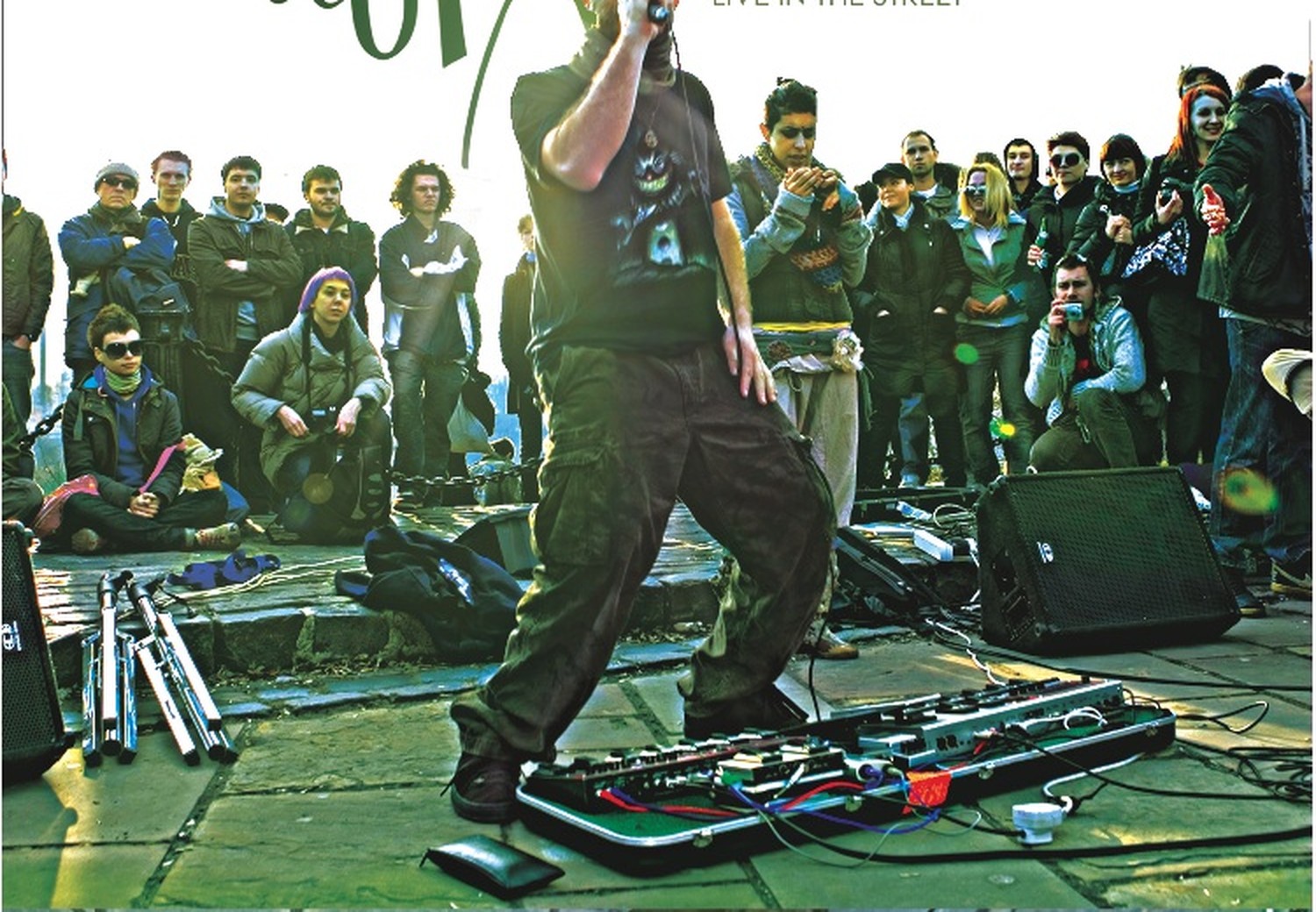
Watch people who do a lot with few devices. Then pick a way of working, not a device.
Pick a person below and watch one video to the end. Note one thing you want to steal.
CH 17People to watch›Very different people doing the same thing: building music in real time instead of playing it back.2 min
Very different people doing the same thing: building music in real time instead of playing it back. Pick whoever grabs you.



- MusicianDub FXVoice, beatbox, effects. Street performance that turned into a worldwide career.→ Chapter 16
- MusicianBeardymanThe reference case for fully improvised sets across changing genres. Partly builds his own instruments.watch
- MusicianReinhardt BuhrMulti-instrumentalist from Cape Town. Layers guitar, electric cello, didgeridoo, cajón and piano live.@ReinhardtBuhr
- MusicianTash SultanaBuilds whole songs alone on stage, guitar and voice, with loop pedals.watch
- MusicianImogen HeapHas been looping live with her voice for decades. Michael Tyson only built Loopy after seeing her live.watch
- MusicianMEZERGFrench, plays theremin, handpan, piano and bass pedals at the same time. Uses the theremin as a gesture trigger, not as a melody instrument.@mezerg2265
- MusicianTribalNeedRiccardo Moretti. Analogue synths, didgeridoo, percussion, hang, children's toys, one loop station. Describes himself as: no DJ, no computer, everything spontaneous.tribalneed.com
- Musiciankristof7sBeatbox, synths, guitar and singing in one live setup. Pulls individual tracks out of songs and plays the whole instrumental live alongside.loopypro.com
- MusicianTutorialsNeon VinesElectronic multi-instrumentalist from Austin. Live looping with pad controllers and a sampler.@NeonVines
- MusicianARIatHOMEAri Miller, New York. Builds music in the street with complete strangers, streamed live, out of a self-welded backpack. The opposite of a studio: everything happens outdoors, on the first take.watch
- MusicianMr. WobblesLoops in 2026 with Loopy Pro. He makes music live with complete strangers on random video chat, and the short videos of it run into six figures. Alongside that he plays whole sets on his own live rig.short videos
- MusicianMarc RebilletImprovises complete pieces out of nothing, in front of an audience, often from shouted suggestions.watch
- MusicianJacob CollierWorked a lot with looping in his early videos, before he moved on to large productions.watch
TribalNeed plays a whole evening with a simple loop station, a synth and a pile of acoustic instruments. If you want to know how far you get with little gear, watch this.
IN THE BOOKLET: CH 17 · OLD VERSION
CH 15A short history of looping›For a long time looping was seen as something guitarists do with their feet.7 min
For a long time looping was seen as something guitarists do with their feet. Floor units, footswitches, one pedal per function. The devices were built, advertised and sold for guitar.
Dub FX took a guitar device and applied it to his voice. The Boss RC-50 lay on the pavement in front of him for years, operated with his feet, while he made drums, bass and harmonies into a microphone. The device was not meant for that. No spec sheet and no advert ever mentioned that you could layer beatbox with it.
That single act of misuse set off more than any product development before it. Out of it came a whole beatbox looping scene, out of the scene came competitions, out of the competitions came a device finally built for hands and voices, and out of its limits came, in the end, the software. It began with someone in the street using a tool wrongly.
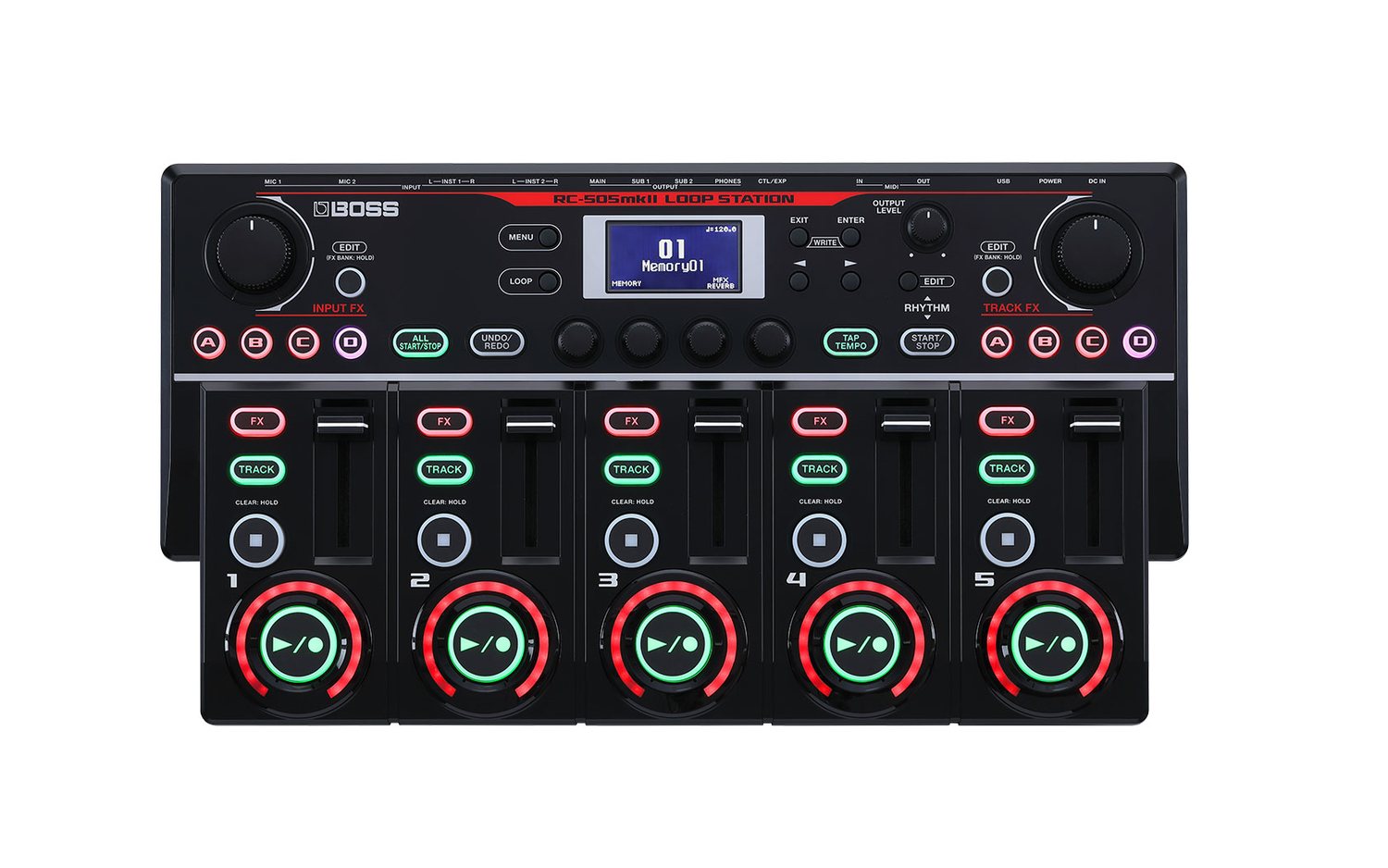

What matters about that: for a long time the competitions prescribed one particular device . Everyone competed on the same machine. That produced an art form of its own, because nobody could get ahead through better equipment, only through ideas and craft.
The championships


It is easy to underestimate what came of this. The loop station battles at Swissbeatbox and at the beatbox championships, in Japan among other places, are disciplines of their own today with an audience of their own. Individual rounds have view counts in the tens of millions. For many people this is the first place they ever saw anything like it.
In these battles everyone competes on the same machine , usually an RC-505. Nobody can get ahead through equipment. It is purely about what someone gets out of a device whose limits everybody knows. That is exactly what this course is about too: not more devices, but more out of what you have.
Watching is worth it, especially if you do not loop yet. In five minutes you understand what is possible with five tracks. A good place to start is the semi-final RYTHMIND versus SO-SO from the Grand Beatbox Battle 2019, by now watched well over fourteen million times.
The scene helped build the device
The part usually missing when someone tells this story: it did not run in one direction. Roland had front-rank beatboxers test the device before it was finished. People who stood on stages with it and competed with it said what was missing, what got in the way and what does not work under pressure.
That is why a lot on the RC-505 sits where a hand finds it in the dark, and not where it looks logical in a manual. The device was shaped by people who had to use it while two thousand people watched.
Conversely the device shaped the scene. Five tracks is a specification, not a law of nature. A competition piece that has to fit into five tracks sounds different from one without that limit. A whole generation of loop sets grew in the shape this one machine laid down.
And why it still did not stop there
The very people who had helped develop the device eventually stopped being satisfied with it. Not because it was bad, but because a metal box has four limits that cannot be moved:
- The number of tracks is fixed. Five is five, forever, for every piece.
- The surface is fixed. The button sits where it sits, even when your piece would need something completely different.
- The effects are fixed. What is in it from the factory is what you have. No retrofitting.
- The sound generator is missing entirely. A loop station records. It invents no notes.
Metal boxes are not quite that fixed any more: some devices gain entirely new functions through new firmware, more on that in chapter 27. And the limits have a good side: in a box, as a rule, everything works.
The counterweight: why many people stay with hardware
The left column sounds like a shortage but is the reason many people stay with hardware. In a box everything generally works, and every knob does something meaningful. There is no setting that has no effect, no menu that leads nowhere, and nothing that has to be set up first. You switch the device on and it is exactly as you left it.
In software, by contrast, you have to think a little like someone who builds things. What happens when this button is pressed? What should it do the second time? Where should it sit? That is more effort before the first note, and more that can go wrong.
In return it is more rewarding in the end, because the result really is your instrument and not a manufacturer's. Both are legitimate decisions. It only helps to make them deliberately rather than sliding into one.
By the way: „without a computer“ is strictly speaking wrong for hardware. There is one inside every one of these boxes. The difference is that it is built in and has exactly one job.
Anyone who reaches these limits has two options: buy and cable up more boxes, or move the whole thing into software, where the surface can be built yourself. The second route leads straight to chapter 21 and to an iPad.
Because it works in both directions. Your setup helps decide what you play. If it forces a shape on you that you never wanted, that is not on you, it is on the setup.
IN THE BOOKLET: CH 15 · OLD VERSION
CH 24Two books, personal›These are not textbooks for the course but two recommendations from me, because both changed something for me.2 min
These are not textbooks for the course but two recommendations from me, because both changed something for me.


Victor Wooten, „The Music Lesson“
The book is not another theory book. It is an attempt to show how small a share the notes have in the whole. Wooten describes ten elements that together make music. The notes are one of them.
In normal teaching almost only the first one comes up. The other nine appear at best as a side note, although they decide whether something sounds good. Articulation is how a note begins and ends. Feel is whether it sits minimally ahead of or behind the beat. Space is what you leave out. Listening is the ability to perceive something other than yourself while playing.
If you play the same melody twice and get two completely different results, you have just experienced nine other elements at work. The book gives them names.
For a course where people improvise in real time instead of reading from a page, this is the foundation. If you build live you have no time to think about notes, and need the other nine all the more. The book fundamentally changed my understanding of music, away from technique and towards something bigger. In the scene I move in it gets recommended by everyone anyway.
He has written a second book. I find the first one better.
Julia Cameron, „The Artist's Way“
Not a music book but one about creative work in general. It is about blocks, about the inner critic, and about getting back to your own creativity. It helped me produce more freely and get in my own way less.
IN THE BOOKLET: CH 24 · OLD VERSION
CH 25Where to learn more›Start at the top.8 min
Start at the top. English comes first, because there is considerably more going on there. If you prefer learning in German, jump straight to the German block.
Then take three things and leave the rest: the SINEE course, an afternoon at the Synthesizer Museum, and a single channel whose music you like. Everything else will find you on its own, as soon as you know what you are looking for.
Several tags per line is normal. Someone who plays and explains while doing it carries both.
English: 19 channels and playlists
- MusicianAlexander SpreeProperly German, Berlin tongue, modular and live techno. No didactics, just someone who gets on with it. Instructive for exactly that reason.@alexanderspree
- MusicianTutorialsAudioPilzThe „Bad Gear“ series. Discusses grooveboxes and drum machines as comedy and explains them better than most serious channels while doing it.@AudioPilz
- MusicianTutorialsLoop With JackLive looping as a craft, setup and working method instead of gear reviews.@loopwithjack
- MusicianReinhardt BuhrA looper who influenced me strongly. If you want to know where this can lead, look here first.@ReinhardtBuhr
- MusicianMEZERGLoops with a theremin and whatever else comes to hand. For anyone in the course who wants to start with unusual sound sources.youtube
- MusicianTutorialsTAETROConstantly invents new ways to play live. Strong at connecting devices that do not really belong together.@Taetro
- MusicianTutorialsBenn JordanTechnically deep, often headstrong, always evidenced. For anyone who wants to know why something works.@BennJordan
- MusicianTutorialsEZBOTHardware production with no computer at all. Exactly the route this course takes.@EZBOT_
- TutorialsFloyd SteinbergSynthesizers and computer matters, explained patiently.@mr_floydst
- MusicianTutorialsNeon VinesBuilds live sets out of hardware and shows the whole road there.@NeonVines
- TutorialsBen Rowlands MusicCalm teaching videos on setup and working method. Not the big tech channel with a similar name.@BenRowlandsMusic
- TutorialsJakob HaqiPad music, for years and out of conviction.@JakobHaq
- MusicianTutorialsTim ExileBuilds his own instruments. Not a starting point, but a look at how far this can go.@TimExile
- MusicianMr. Wobbles, Live @ Electric Forest 202657 minutes straight, the whole rig in shot. The counterpart to his short videos: here you see how the parts work together over a full hour.watch
- TutorialsPerfect CircuitIndependent music shop from California with a channel of its own, around 1400 videos. A calm demo of almost every device, without sales talk. Good for hearing what something really sounds like before you buy.@PerfectCircuit
- MusicianTutorialsDoctor MixTakes well-known pieces apart down to the individual tracks and rebuilds them. The series is called Deep Reconstruction. If you want to understand what a track really consists of, this is the place.Doctor Mix
- PlaylistFabFilter, Mixing and MasteringThe best explanatory series on signal processing I know. Sample rates, phase, loudness, mid and side, stereo that survives mono. Very good visualisations, and afterwards you understand why the numbers in your interface sit where they sit. Start with „Samplerates: The Higher the Better, Right?“Playlist
- TutorialsBaphometrixMixing and music theory. Their series „Clip to Zero“, CTZ for short, is the most thorough thing I know on the subject of loudness.Playlist
- PlaylistLoopy Pro, artist spotlightsThe portraits from chapter 23, all in one place.loopypro.com
From me directly
My channel is called @graycontrast. It is mostly recordings from the street and from Berlin. Two things on it relate directly to this course.
- by meTutorialsKristof7s compendiumHis complete working method in Loopy Pro, written up by me, in German. Template structure, effect chains, sidechain, buildups, acapella system. The same page also exists in English.read
- by meTutorialsCTZ method, Clip to ZeroThe loudness method from the Baphometrix series, translated and applied to Loopy Pro.read
- by meTutorialsBest Budget DAWLESS Set-Up? (Hardware)What you really need to start without a computer. The most direct answer to the most common question in the course.watch
- by meMusicianImprovising Psychedelic Techno Until Police Stops MeA whole set outdoors in Berlin, Circuit Tracks and RC-505, until the police end it. My most-watched video. So you can see where the things from Booklet 1 can lead.watch
German, because German
This block is deliberately at the back. The sources here are not better than the ones above, they are in German. If English is no obstacle for you, skip it. The exception is Alexander Spree, who is up with the musicians because that is where he belongs.
German, to get started
- TutorialsSINEE, free course in electronic music production21 lessons, a good two hours, free, explicitly without prior knowledge. The most straightforward German entry point I know.sinee.de
- TutorialsMusicStoreTV, "Synth Basics" seriesNumbered through and explained calmly. Episode 1 how a synth works, episode 2 from MIDI to the Moog sound, episode 4 the modulation matrix.Episode 1
- TutorialsThorsten HillmannMIDI basics for beginners, aimed at people coming from the keyboard. Fits chapters 03 and 04 of Booklet 1 exactly.youtube
- TutorialsTo-Musik, Boss RC-505 MKIIFive-part German series on the loop station, filmed for beginners. The only one of its kind in German.youtube
- Tutorialskeyboards.de, tutorialsGerman trade magazine, fresh articles all the time on oscillators, filters, portamento. For looking things up, not for working through.keyboards.de
German, to go deeper
- TutorialsOdo SendaidokaiVery active, marks his German videos in the title. „Musik, ADSR-Hüllkurven“ runs 17 minutes and finishes chapter 13 of Booklet 1.youtube
- TutorialsBonedo, Tutorial Drum ProgrammingGerman text on building drum patterns, matching chapters 11 and 12 of Booklet 1.bonedo.de
Archive: channel dormant, content still valid
Archive: three older series
These channels have been quiet for years. What they explain is still right, fundamentals do not go out of date.
- TutorialsGötz Müller-DürholtMaps onto our syllabus almost one to one: E02 oscillator, E03 envelope, E04 filter, E05 LFO, E09 step sequencer. As follow-up work to chapter 13 of Booklet 1, the best German address.youtube
- TutorialsunterwasserbeatboxerThe only German Loopy Pro series, nine parts, from 2021. Filmed before version 2, so the surface looks different today, but the thinking behind it still holds.search
- TutorialsRECORDING.de, synthesizer course51 parts, from 2015, very thorough.Playlist
Why the German list is so short
In German there is no active channel on live looping for voice or electronics, no current material on iPad music, and nothing freely available from adult-education or music schools. I found none of it, and I did look. If you do know of something: send it over, it belongs in the next edition.
Manuals that are actually good
Both are in English, both are free, and both are better written than most textbooks.
- TutorialsLoopy Pro, manualSorted by task instead of by menu. If you want to know how the first recording works, there is a chapter called „Getting Started with Live Looping“ and in it exactly the moves from chapter 21.loopypro.com
- TutorialsCircuit Tracks, manualThe official manual for the device I bring. Sadly there is no German version, only English. For anyone who wants to go deeper there is also a programmer's reference with all the MIDI commands.PDF
Places in Berlin where people help
- PlaceSynthesizer Museum BerlinSkalitzer Straße 135a, Kreuzberg. Over fifty synthesizers, and everything may be touched. Of everything on this list the best tip for starting out, because you finally have sound under your fingers instead of in a video.synthesizermuseum.info
- PlaceSchneidersLadenShop for Eurorack and hardware, now in Neukölln. Very helpful, even if you buy nothing. After the move the museum occupies the old premises.Neukölln
- MusicianPlaylistFunkwerke Streams, BerlinRegularly streams live sets played entirely on hardware, from Berlin. If you want to see how other people actually operate their boxes, there are hours of it here. The relevant series is called HRDWRE.watch
- Placebusk.coPlatform around street performance, built up by Nick Broad. Maps of permitted pitches, field reports, legal matters, and a community doing exactly what Booklet 2 talks about in its first chapter.busk.co
- PlaylistSwissbeatbox, loop station battlesThe competition rounds from the Grand Beatbox Battle. All on the same machine, usually an RC-505. Individual rounds have view counts in the tens of millions.watch
- DateLOOP MAYHEM, KasselA meeting for live looping, running since 2023, organised by FRIIDON & Friends. Not Berlin, but the occasion in the German-speaking world to see other loopers live. kristof7s from chapter 22 has played there several times.Kassel
And if you ever find something yourself that is missing here: send it to me. The next edition of this booklet will then be better than this one.
IN THE BOOKLET: CH 25 · OLD VERSION